
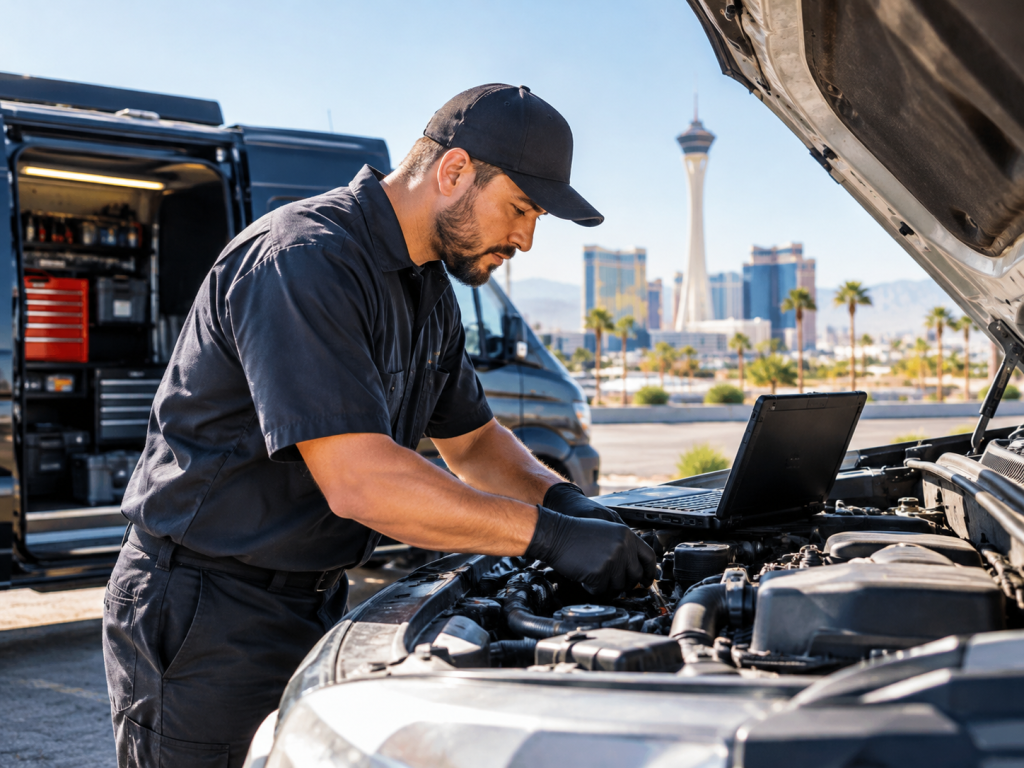
If you drive in Lubbock, you already know the sight: a brown haze on the horizon, a film of fine dirt on the hood, and grit on the dashboard no matter how often you wipe it. West Texas dust is part of life on the South Plains, and your car breathes it in every time you drive. Your engine needs a steady supply of clean air to run well, and dust is one of the biggest threats to that supply. This guide explains how dust affects your engine, how the air filter protects it, the signs that your filter is struggling, and how a mobile mechanic can handle the engine air filter in Lubbock without a trip to the shop.
Why Your Engine Needs Clean Air
An engine is basically a large air pump. To burn fuel, it mixes fuel with a large volume of air, and the computer adjusts that mixture constantly based on how much air is coming in. Everything that enters the engine passes through the intake system first. The air filter sits at the start of that path and its only job is to stop dirt, sand, pollen, and debris before they reach the sensitive parts inside. When the filter does its job, your engine gets clean air and runs the way it was designed to. When it cannot keep up, problems begin.
What Dust Does to an Engine
Dust is not just dirt. Much of it is made of tiny mineral particles, and some of those particles are hard and abrasive. Over time, dust can affect an engine in several ways:
- It clogs the air filter, which restricts airflow and makes the engine work harder
- It can pass through a worn or poorly fitted filter and scratch cylinder walls, pistons, and rings
- It can coat the mass airflow sensor, which leads to incorrect readings and a poor fuel mixture
- It can build up in the intake system and throttle body, causing rough idle or hesitation
- It can mix with oil vapor and leave sludge and deposits in places that should stay clean
- It can overload the cabin air filter, which affects the air you breathe inside the car
The damage is usually gradual. A single dusty afternoon will not ruin an engine, but months of driving with a clogged or damaged filter can quietly wear things down and cost you performance and efficiency.
How the Engine Air Filter Works
Most engine air filters are made of pleated paper or a similar material in a rigid frame. The pleats create a large surface area, and the material traps particles while letting air pass through. As the filter collects dust, it becomes less able to move air, and eventually it needs to be replaced. A filter that is a little dirty can actually trap particles slightly better, but a heavily clogged one restricts airflow too much. In dusty places, the filter can load up faster than the typical schedule assumes, which is why local conditions matter.
Signs Your Engine Air Filter Needs Attention
- Reduced acceleration or a sluggish feel when you press the pedal
- Poorer fuel economy than you are used to
- Rough idle, hesitation, or an engine that sputters
- A check engine light, sometimes related to airflow or fuel mixture
- Unusual engine sounds, such as coughing or popping during acceleration
- A filter that looks dark, packed with dirt, or visibly clogged when held up to the light
- Black smoke or a strong fuel smell from the exhaust in some cases
These signs can also come from other problems, such as worn spark plugs or fuel system issues, so a proper check is better than guessing. Still, the air filter is one of the simplest and least expensive things to inspect, and it is a good first place to look.
Why West Texas Is Hard on Air Filters
Lubbock sits in an open, flat region where wind blows often and dry fields and unpaved roads send fine particles into the air. Dust storms, farm activity, and long dry spells all add to the amount of dust your car may breathe. Wind also pushes dust around even on ordinary days, so the filter works harder than it would in a calmer, damper place. Our article on West Texas wind and dust and what it does to your engine covers the bigger picture of how these conditions wear on your vehicle, and the air filter is one of the first parts to feel it.
How Often Should the Engine Air Filter Be Changed?
There is no single answer for every car. Manufacturers list an interval in the owner’s manual, and that is the best starting point. Most manuals also list a shorter interval for severe or dusty driving conditions, and West Texas often falls into that category. If you drive on gravel or dirt roads, spend time on rural routes, or live in an area with frequent dust, it makes sense to inspect the filter more often than the standard schedule suggests. A quick visual check at each oil change is a simple habit, and a technician can tell you whether the filter has plenty of life left or needs to be replaced now.
Can I Clean and Reuse My Air Filter?
It depends on the type. Standard paper filters are generally meant to be replaced, not cleaned. Tapping one against a surface or blowing it out with compressed air can damage the material and push dust deeper into it. Some performance filters are made to be cleaned and re oiled, but they need the right products and procedure, and too much oil can foul airflow sensors. If you are not sure what kind of filter your car has, check the owner’s manual or ask a technician before trying to clean it.
What About the Cabin Air Filter?
Your car has a second filter, the cabin air filter, that cleans the air coming through the vents. Dust loads it up too, and a clogged one can reduce airflow from the heater and air conditioner and cause musty smells. It is a separate part from the engine air filter, but it is often worth checking at the same time, especially when dust is a regular part of your driving.
Other Dust Related Problems to Watch For
Dirty Airflow Sensor
The mass airflow sensor measures how much air enters the engine. Dust or oil residue on it can make it read incorrectly, which can lead to a rough idle, poor fuel economy, or a check engine light. A technician can inspect and clean it if appropriate.
Dirty Throttle Body and Intake
Over time, a film of dirt and carbon can build up around the throttle body and intake passages. That can cause an unsteady idle or slow response when you accelerate. Cleaning it is a routine service in many cases.
Damaged or Poorly Seated Filter
A filter that is torn, bent, or not sitting properly in its housing lets unfiltered air slip past. Because the dust bypasses the filter, it can reach the inside of the engine. If the air filter box has been opened for any reason, make sure the filter is seated correctly and the cover is latched.
Battery and Electrical Connections
Dust mixed with moisture can coat battery terminals and connectors and cause weak connections. If your car struggles to start, our guide to the top 10 reasons your car won’t start and how to get back on the road covers the most common causes, which are worth checking before assuming the worst.
Simple Ways to Protect Your Engine From Dust
- Follow the severe driving schedule in your owner’s manual if you often drive in dusty conditions
- Look at the air filter at regular intervals, and replace it when it is dirty
- Use the filter type and size your vehicle calls for
- Keep the air filter housing closed and latched after any service
- Avoid following close behind trucks on dirt or gravel roads
- Keep up with oil changes, since clean oil helps protect parts if dust gets through
- Keep the intake area and engine bay reasonably clean, and avoid spraying water into the intake
- Have the intake system and airflow sensor inspected if the car runs rough
What Happens During an Air Filter Service?
It is usually quick. A technician opens the air filter housing, removes the old filter, and inspects it for dirt, damage, and signs of leaks around the seal. They also look at the inside of the housing and the intake path for debris, wipe out any loose dirt, and install a new filter that matches your vehicle. If the symptoms suggest more than a dirty filter, they may check the airflow sensor, the throttle body, the spark plugs, and the fuel system, since several problems can feel similar to a clogged filter.
Can a Mobile Mechanic Replace My Air Filter?
In many cases, yes. Replacing an engine air filter is a common job that a mobile mechanic can often do at your home or workplace in the Lubbock area, along with inspecting the cabin air filter, checking the intake system, and looking at the overall condition of your engine. That saves you time and a trip to a shop. Some jobs, such as deeper engine cleaning, internal engine repair, or work that needs a lift or specialized equipment, may need a full shop, and a trustworthy technician will tell you honestly when that is the case. When you book, share your vehicle’s year, make, model, and mileage, plus any symptoms you have noticed, so the right filter is ready.
Do Not Let the Dust Win
Dust is a fact of life in West Texas, but it does not have to cost you power, mileage, or engine life. A clean filter is one of the least expensive ways to protect a very expensive part of your car. If you have not looked at your filter in a while, or you have noticed your car feeling sluggish, now is a good time to have it checked.
To learn more about our services, visit our homepage. If you would like your air filter inspected, reach out through our contact us page and we will come to you anywhere in the Lubbock area.