
Lubbock sits out on the flat, open expanse of the Llano Estacado, and that geography means wind here is not an occasional weather event, it is a defining feature of daily life. Sustained winds sweep across the South Plains with little to interrupt them, and when conditions turn dry, particularly during late summer and fall cotton harvest season, this same wind can whip up dust storms severe enough to reduce visibility to almost nothing within minutes. These sudden, intense events put a specific kind of stress on a vehicle’s engine that a milder, less wind exposed part of the country never has to contend with.
Why Lubbock’s Wind Creates A Different Kind Of Dust Problem
Many dusty regions deal with a fairly steady, low level presence of airborne particulate throughout dry stretches of the year. Lubbock’s situation is different, since the flat, largely unobstructed terrain of the South Plains allows wind to reach sustained speeds that can suddenly lift enormous volumes of soil and dust into the air, particularly from freshly tilled or harvested agricultural fields surrounding the city. Rather than a consistent low level dust exposure, Lubbock vehicles often face sudden, intense bursts of extremely high particulate concentration during an actual dust storm or haboob event, followed by more moderate conditions in between.
This pattern of sudden, severe exposure matters because a single significant dust storm can deliver more particulate load to a vehicle’s air intake and cooling system than weeks of milder ambient dust exposure would in a less wind prone region, meaning the timing of maintenance around these specific events matters as much as general seasonal scheduling.
How A Dust Storm Overwhelms Your Air Filter Quickly
Your engine air filter is designed to handle a gradual accumulation of dust and debris over its expected service life, but a genuine West Texas dust storm can deliver an amount of particulate that would normally take weeks to accumulate within just a single severe weather event. A filter that was perfectly adequate before a major dust storm can be significantly loaded down afterward, restricting airflow to the engine and reducing both power and fuel efficiency until it is replaced or cleaned.
Driving through or shortly after a significant dust event without checking your filter condition risks compounding this problem, since a heavily loaded filter continues restricting airflow with every mile driven until it is addressed, rather than simply causing a one time inconvenience that resolves on its own.
Why Cooling Systems Take A Hit During These Events Too
Radiators depend on relatively unobstructed airflow through their fins to dissipate engine heat effectively, and a significant dust event can coat these fins with a meaningful layer of fine particulate in a very short amount of time. This reduces cooling efficiency precisely when temperatures may already be elevated, since Lubbock’s dust storms frequently occur during the hottest, driest stretches of late summer when cooling systems are already working harder than usual.
A radiator that has just been coated during a severe dust event may show a noticeably higher operating temperature on subsequent drives, even without any other underlying cooling system problem, simply because the accumulated dust is doing exactly what it would do to any radiator, blocking the airflow the system depends on to function properly.
Signs This Combination Is Affecting Your Vehicle
A few signs suggest wind and dust have taken a toll on your engine. Reduced power or fuel efficiency that seems to have developed suddenly, particularly following a notable dust storm, often points to a heavily loaded air filter. A temperature gauge running higher than normal, especially after a period of severe wind and dust, can indicate radiator fins that have accumulated enough particulate to meaningfully reduce cooling capacity. If your vehicle has struggled to start after sitting through extreme heat or a dust event, our guide on the top 10 reasons your car won’t start and how to get back on the road covers a range of causes, several of which can be connected to the kind of compounded stress that West Texas wind and dust place on multiple vehicle systems at once.
Maintenance Habits That Help Lubbock Drivers Stay Ahead
Checking your air filter after any significant dust storm, rather than waiting for the next scheduled maintenance interval, is one of the most effective habits for West Texas drivers specifically, since a single severe event can load a filter well beyond what a normal mileage based schedule would anticipate. Building a habit of inspecting radiator fins periodically, particularly during the late summer and fall months when dust storms are most common here, helps catch reduced cooling efficiency before the hottest days of the year expose the problem fully.
Cotton harvest season deserves particular attention on this front, since the combination of freshly disturbed field soil and the seasonal wind patterns typical of that time of year creates some of the most severe dust conditions Lubbock sees all year. Vehicles that regularly travel routes bordering active farmland during this stretch face more concentrated exposure than those sticking primarily to streets within the city itself, which is worth factoring into how often you check your filter and radiator during these particular months.
Keeping an eye on local weather alerts for dust storm warnings and, when practical, avoiding unnecessary driving during the most severe events reduces both the immediate visibility risk and the accumulated wear on your vehicle’s air intake and cooling systems.
Why A Mobile Mechanic Understands Lubbock’s Specific Pattern
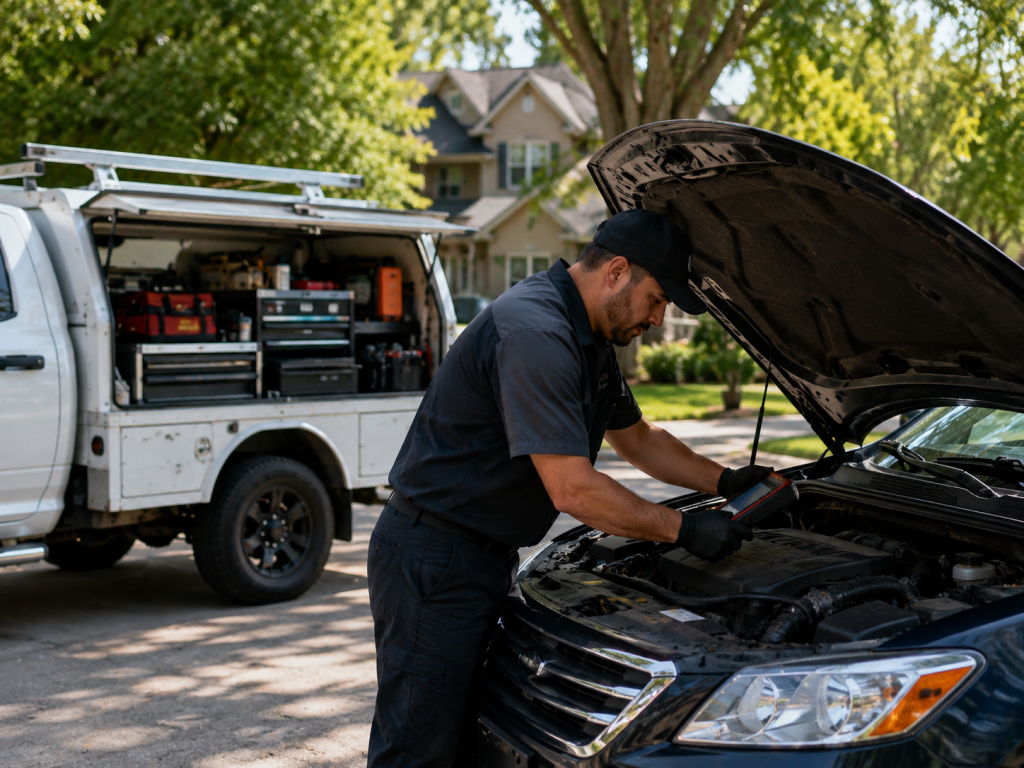
A technician who regularly services vehicles throughout the South Plains understands that Lubbock’s wind and dust challenge is less about constant, gradual exposure and more about sudden, severe events that demand a responsive rather than purely scheduled approach to maintenance. Rather than waiting for a fixed mileage interval, a mobile mechanic familiar with this climate can check filter and radiator condition specifically after a significant dust event, catching problems tied to that particular storm rather than treating maintenance as a purely calendar based routine.
We covered the broader advantages of choosing mobile service in our article on why mobile mechanics are better than traditional auto shops in Lubbock, which explains how convenience and local familiarity come together, particularly useful for a maintenance challenge as event driven as this one.
Stay Ahead Of West Texas Wind And Dust
Lubbock’s wind and dust are simply part of life on the South Plains, and while neither can be avoided, staying ahead of how they affect your engine’s air intake and cooling system is well within your control. Checking these systems proactively, especially after a significant dust event rather than only on a fixed schedule, keeps your engine running efficiently through another West Texas wind season.
If it has been a while since your filters or cooling system were checked, or if you have recently driven through a significant dust storm, visit our homepage to learn more about our services, or reach out through our contact us page to schedule a visit at your home or office anywhere in the Lubbock area.
A little proactive attention now can help your car handle everything West Texas wind and dust throw at it throughout the year.